
In June, Youth Progress organized 2 FREE webinars as part of the dissemination of the Erasmus+ project Wear the Future, which we have been implementing in collaboration with Fashion Revolution Czech Republic.
The aim of the webinars was to gather important actors and professionals from the field of (not only) sustainable fashion and non-formal education and provide share their good practices and impactful projects that help educate communities, encourage activism related to fashion industry. We presented projects that encourage active engagement through local and international initiatives, helped raise awareness about European programmes and their role in supporting social initiatives and introduced the idea behind the Erasmus+ project Wear the Future, its objectives and incomes. The attendees learned how different initiatives across the globe are turning frustration into ideas and ideas into impact.
Hereby we are bringing to you an overview of the speakers, topics and main ideas covered in both webinars, as well as recordings of both events that is available on our Youtube channel –> see below.
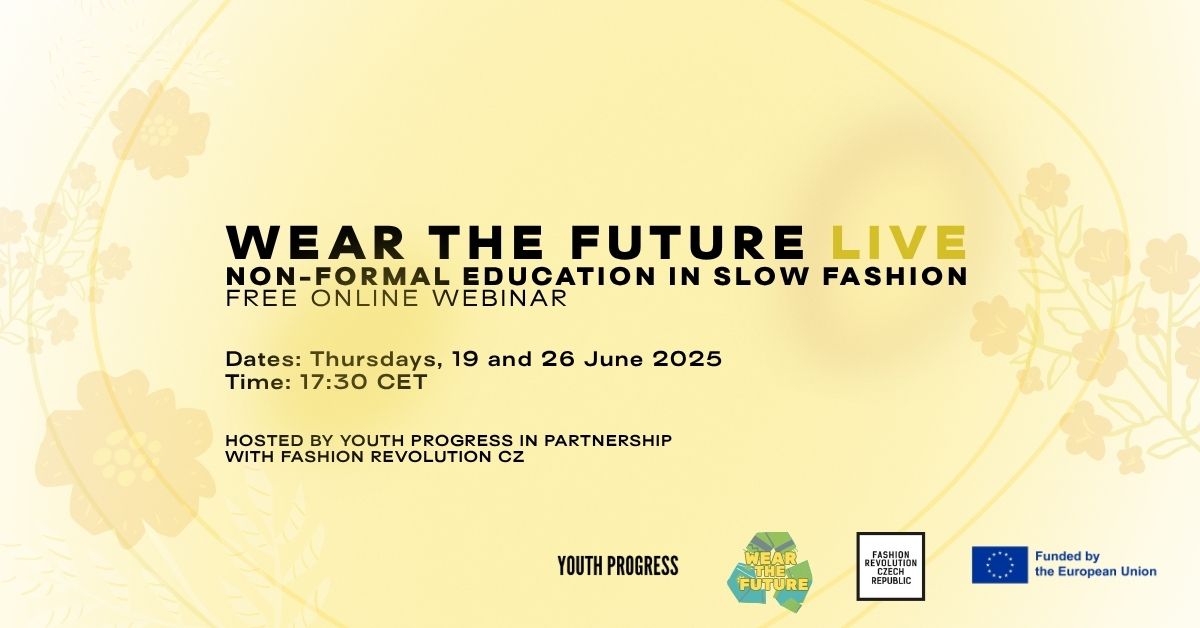
The first webinar on June 19 offered the following:
Alexandra Šebestová from the youth organization Youth Progress opened the online event introducing the concept of non-formal education in local and international contexts and European programmes that support youth empowerment, active engagement and initiatives. As an example of a good practice, she presented outcomes from the project Wear the Future, which connected 30 youth workers from 6 European countries for an international training that lead to development of a valuable educational Toolkit, supported by the expertise of Fashion Revolution Czech Republic, one of the the project’s partners. She emphasized the crucial points for international project writing and implementation and encouraged cross-border cooperation among the attendees.
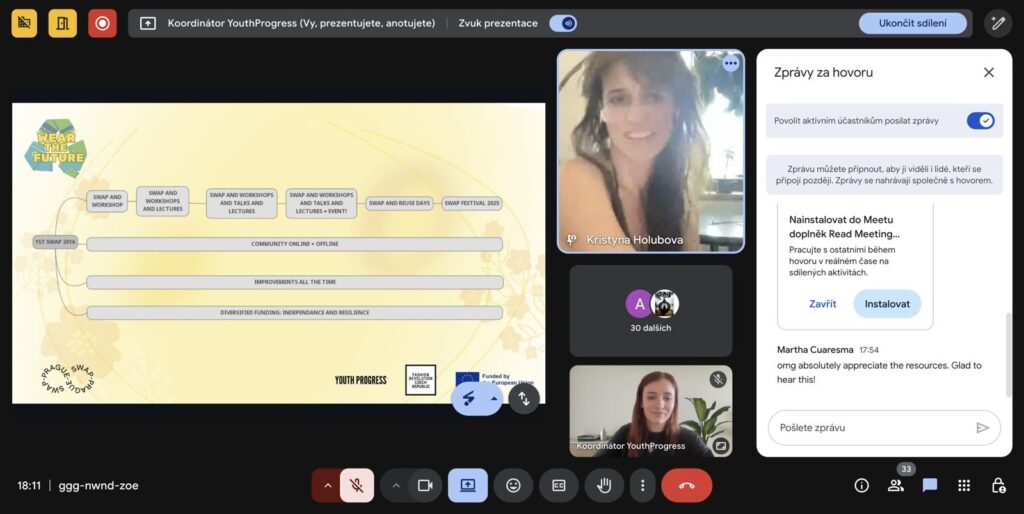
Kristýna Holubová, a passionate changemaker and a co-founder of Swap Prague, introduced the concept of a swap event as a playful, yet powerful tool to challenge overproduction and engage community, while at the same time, a great opportunity to raise awareness about current challenges in the fashion industry and to spread the idea of more healthy and sustainable consumer habits when it comes to (not only) clothing.
Since 2016, through her work in Swap Prague, she has already helped save more than 280 tons of clothes and everyday items from landfill, while creating a values-driven community that is based in sharing and mindful living.
As the last speaker of the 1st session, we welcomed Pedro Andía, Sales Manager of Witral, a fair trade certified company, which collaborates closely with artisan women in southern Chile to promote sustainable textile production. Pedro talked about how the company is blending ancestral weaving techniques with contemporary design, and so preserves cultural heritage and also creates meaningful livelihoods. Witral’s mission is a great example of a social business that empowers rural artisans through fair trade, merging traditions with modern design. To conclude, Pedro outlined their next plans, which include his desire to expand their brand into European countries.
Are you curious to hear more? Watch the whole part 2 of the webinar under the link below.⬇️
The second webinar on June 26 offered the following:
The webinar was opened by Martin Beneš, Executive Director and Country Coordinator at Fashion Revolution Czech Republic. He shared with us insights from past projects of the movement, focusing on case studies from bridging formal and non-formal education. He introduced the main campaigns of Fashion Revolution, such as #WhoMadeMyClothes and valuable educative materials from RecyCOOL Academy, which offers useful resources that help educators from across the globe apply non-formal education activities in both formal and non-formal education settings.
The next speaker was Paula Leal, Executive and Project Coordinator at Fashion Revolution Brazil, who spoke on the topic of “Decolonial Fashion School and the importance of decolonizing fashion studies”. She used real examples of projects to show how fashion can be a powerful tool for decolonizing our perceptions of the fashion industry and fostering a more equitable and just world.
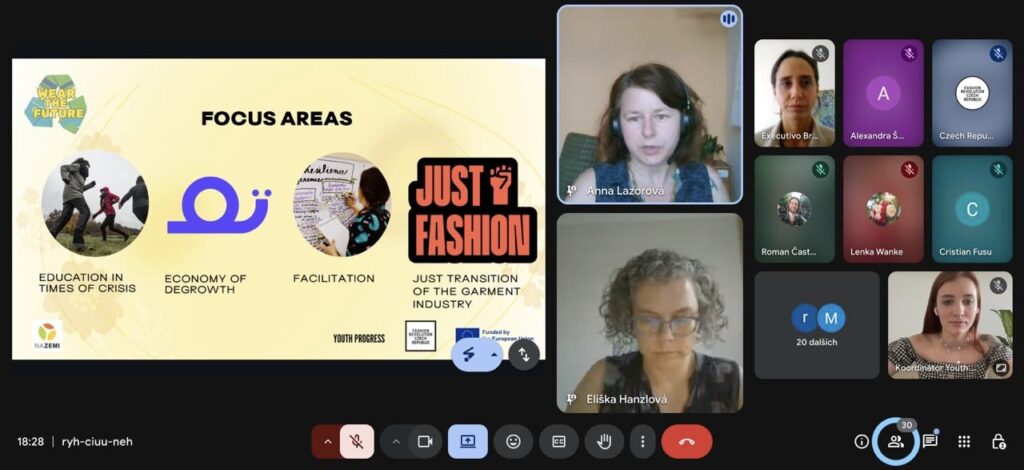
Third speakers were Anna Lazorová, expert in labor rights in the Global South, and Eliška Hanzlová, global education lecturer and methodology specialist, both from the organization NaZemi.
NaZemi is a Czech non-profit organization working for over 20 years to build a world where everyone’s needs are met within planetary boundaries. The organization promotes transformative education, solidarity-based economies, and fair working conditions, especially in sectors like the garment industry.
Anna Lazorová used the opportunity to share inspiring strategies on how to transform the fashion industry fairly, with a strong focus on empowering workers and building just global supply chains.
Eliška Hanzlová talked about connection between the world of clothing and her passion for education through the topic of transforming the garment industry and she further introduced several valuable educative materials that are available for anyone who wants to expand their knowledge in the field or even aims to apply it in their own work of teacher, educator, youth worker and more.
The last speaker was Ana-Marija Mileusnić, an activist and campaigner from Zelena Akcija, Croatia’s leading environmental organisation, working for over 30 years to protect nature and the environment, promote sustainable development, and empower communities to take action. Ana-Marija presented their work that ranges from climate justice to fighting plastic pollution, from energy democracy to defending public spaces, and specifically emphasized several projects and campaigns that bring communities together; such as Migrant Workers Rights Campaing, textile repair workshops Šiv-pop or clothing Swap Parties — all aimed at extending the life of products and reducing textile waste.
Wanna hear more? Watch the whole part 2 of the webinar under the link below.⬇️
The webinar was organized as part of the Erasmus+ mobility project Wear the Future, which aims to raise awareness about ethical fashion, the circular economy, and sustainability. It seeks to equip youth workers and educators across Europe with tools to fight overconsumption and educate young people about the harmful impact of so-called “affordable” fast fashion. Wear the Future is organized by the Youth Progress association in partnership with Fashion Revolution Czech Republic and is co-funded by the European Union.